Anatomy of a Passage
From Double Bass to Composition: Mark Cauvin
by Kasper T. Toeplitz
If there has been progress (although the question of progress in art is complex), or at least an evolution—a change—in music in recent years (and by “recent” we mean at least on the scale of a quarter-century, placing us around the year 2000, or perhaps even earlier, in the 1980s), this change has occurred more in the relationship to creation and the practice of music than in the invention of new techniques or rules.
In other words, it is not so much the nature of music itself that has evolved or undergone a major transformation (as was the case at the beginning of the 20th century with the Second Viennese School and the invention of twelve-tone technique and serialism, or some seventy years later with the emergence of spectral music—particularly in France—linked to developments in computer music, not to mention musique concrète, later called acousmatic music, which from the 1940s onward fundamentally changed what music is, both in thought and material). No—the main transformation that seems to have taken place around the turn of the millennium is the disappearance of the old dividing line between “composers” on one side and “performers” (or instrumentalists) on the other.
For centuries, one belonged to one side or the other of this imaginary barrier, even though there were composer-performers and virtuosi—Frédéric Chopin, Franz Liszt, Robert Schumann, and more recently Heinz Holliger. In reality, the erosion of this boundary began with jazz, where musicians often played their own compositions, sometimes even abandoning the notion of authorship altogether (think of Ornette Coleman and titles like This Is Our Music, or his 1961 album Free Jazz: A Collective Improvisation). Rock followed (though the music industry ensured the distribution of authorship rights, often unfairly).
Yet throughout this period, and up until the end of the 20th century, so-called “serious” contemporary music maintained a hierarchy in which the composer was elevated above the performer. Pierre Boulez, for example, once stated that if instrumentalists were truly inventive, they would be composers.
With the 21st century, however, the categories of “composer” and “instrumentalist” have largely given way to that of the “musician”: someone who both plays and composes, or at least shapes the music they perform—defining its structure and trajectory. It has become increasingly rare to encounter an instrumentalist who does not create their own music. Those who do not often come from strictly academic training, steeped in reverence for tradition and the figure of the composer as a quasi-omniscient being.
Today, that an instrumentalist composes is almost self-evident.
Of course, the path is often similar: one begins with a solo piece for one’s instrument, then expands to duos, small ensembles, and gradually outward. Rare are those who begin directly with large-scale orchestral works—though with more flexible contemporary ensembles, this may become more common. Similarly, moving directly into purely electronic composition is uncommon.
This does not diminish the value of such works. Chopin, for instance, wrote almost exclusively for his instrument—the piano—and only rarely for other ensembles, always including the piano. As always, some works will be trivial, mere technical exercises or displays of virtuosity. Others—fewer—will go deeper, inventing new forms.
This trajectory is similar in dance: performers begin with solos, then duos, then group works, eventually becoming choreographers. The reverse path—from composer to performer—is possible, but less common.
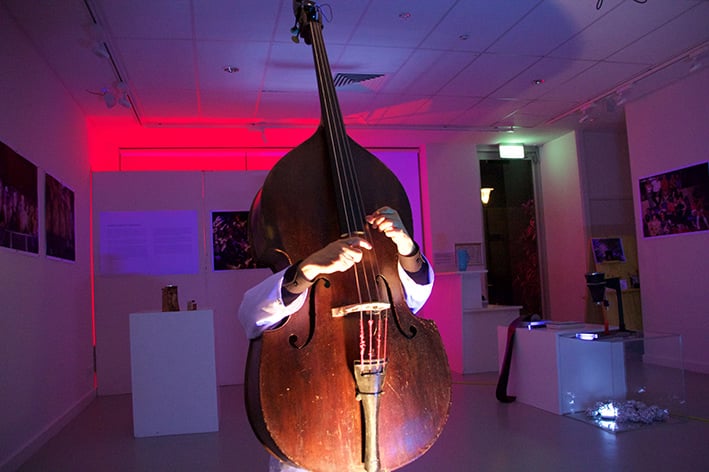
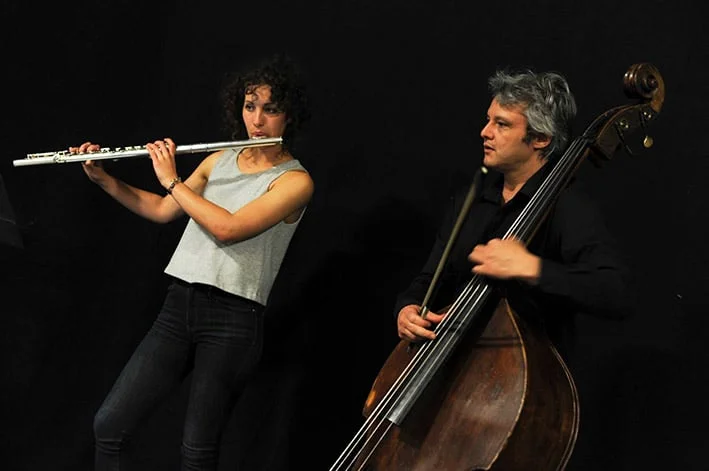
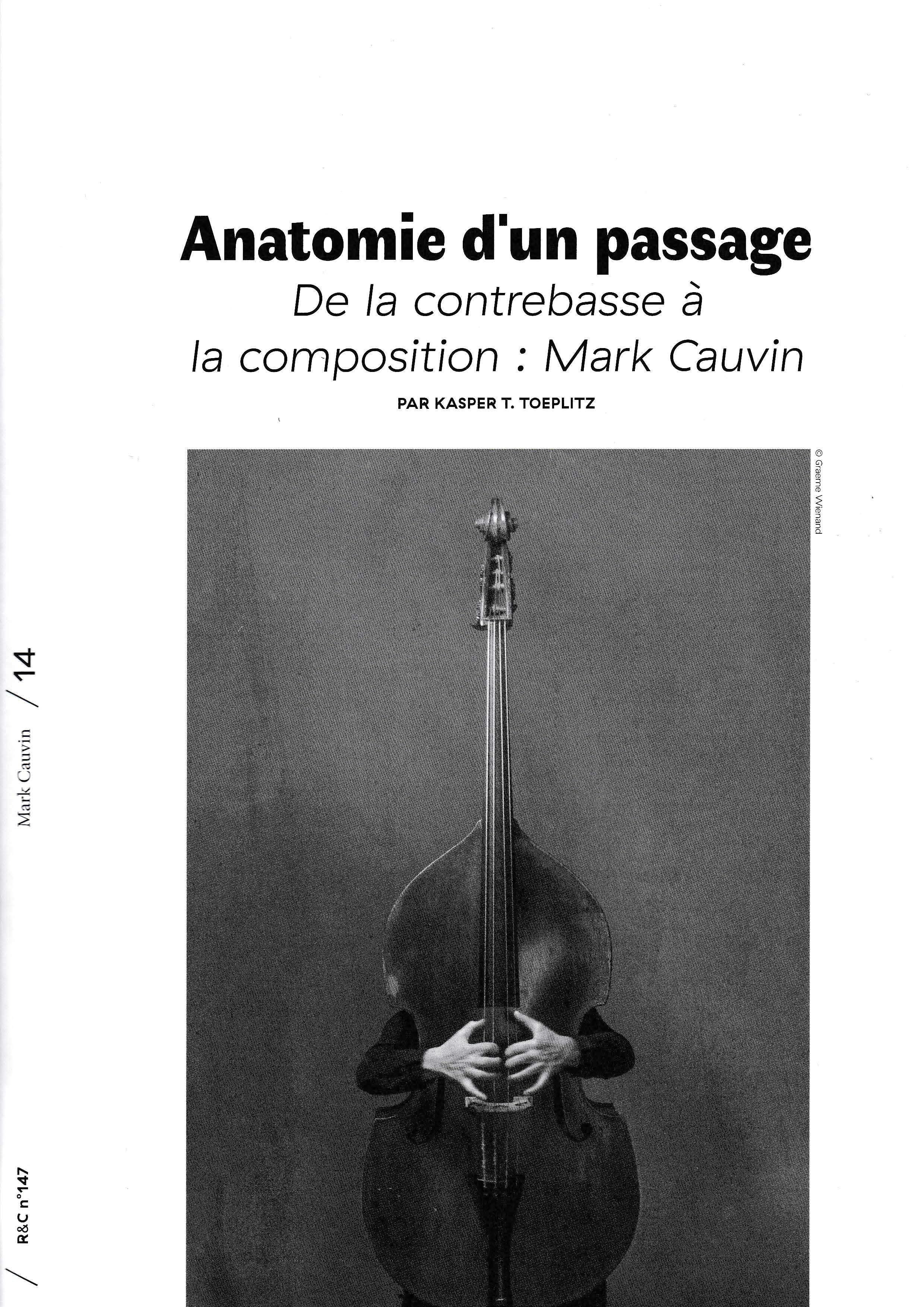
It is this passage—from instrument to the invention of musical form—that interests me here, because it is the path followed by Mark Cauvin.
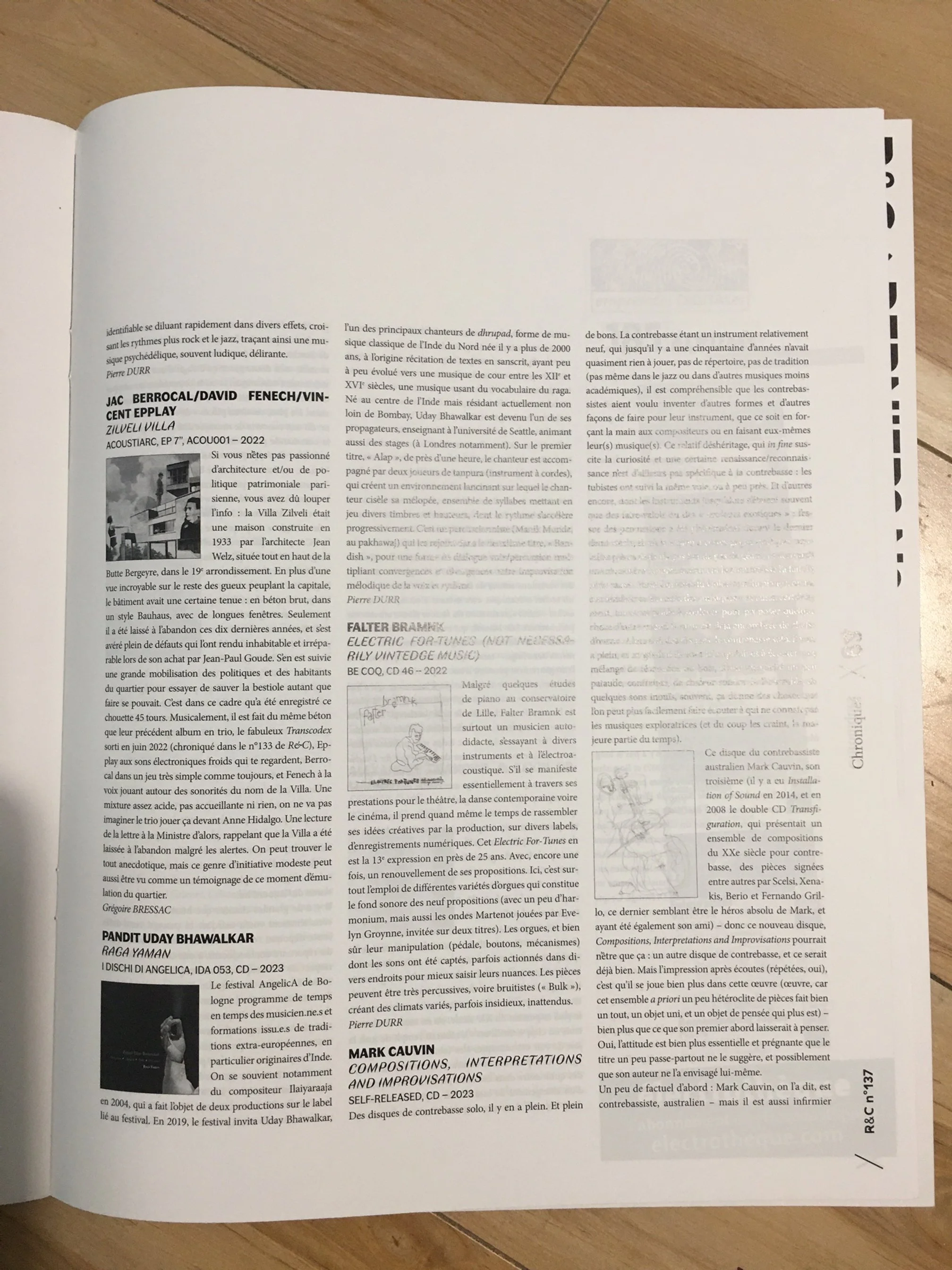
At the time I first encountered him, Mark Cauvin was, to me, a very good double bassist and an inventive improviser—essentially the minimum one might expect from someone claiming to play an instrument. His first recording, the double CD Transfiguration (2008), consists entirely of interpretations of works by others—Scelsi, Berio, Xenakis, and many pieces by Fernando Grillo. This clearly situates his musical origins.
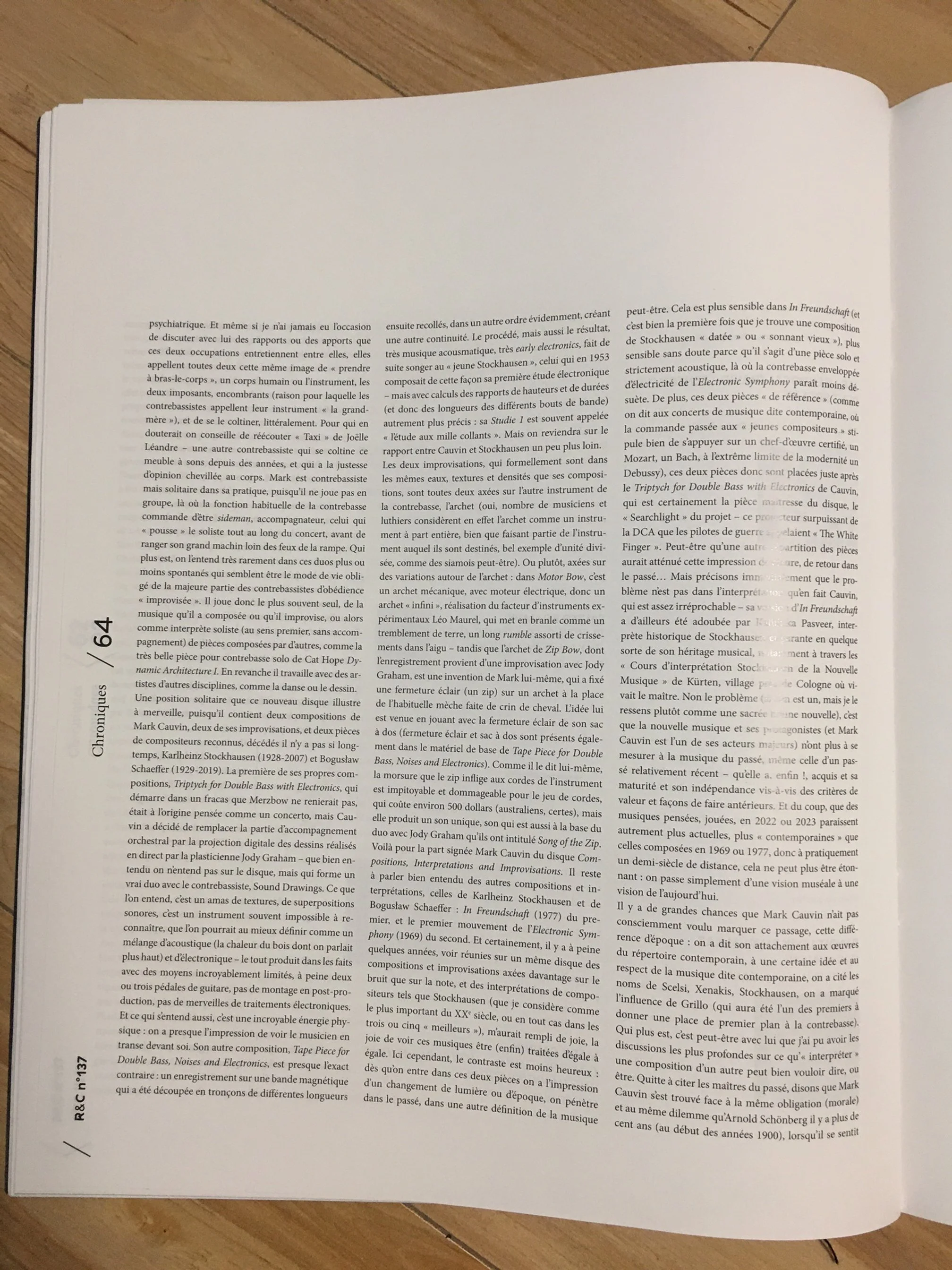
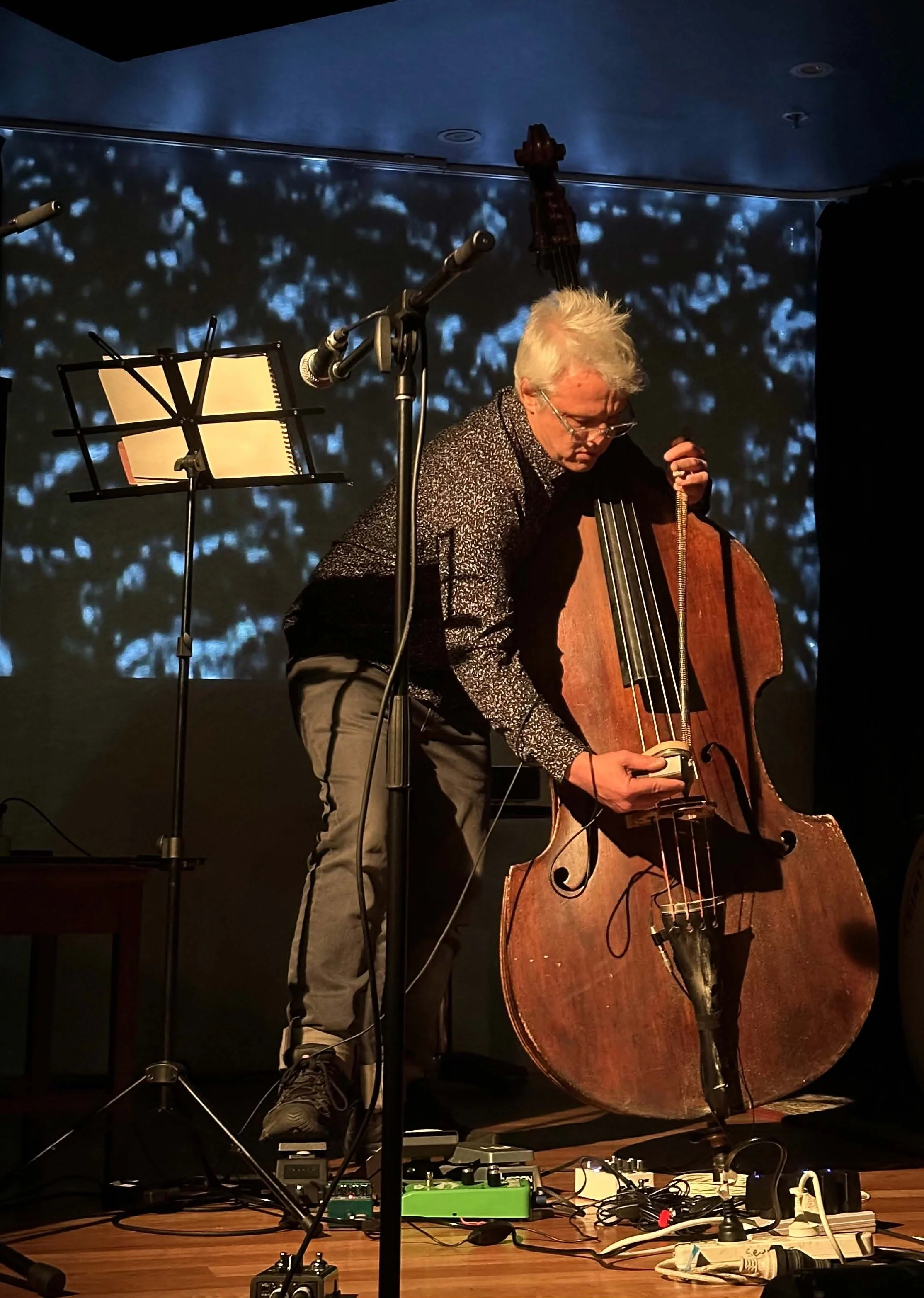
Later recordings confirmed this impression of a performer beginning to create his own work. On Compositions, Interpretations and Improvisations (2023), he plays Stockhausen and Schaeffer alongside his own pieces, often derived from sonic discoveries made while working with the instrument. For example, Motor Bow originates from exploring a motorised bow; Zip Bow from attaching a zipper to the bow—an idea that came to him while absentmindedly playing with a backpack zipper.
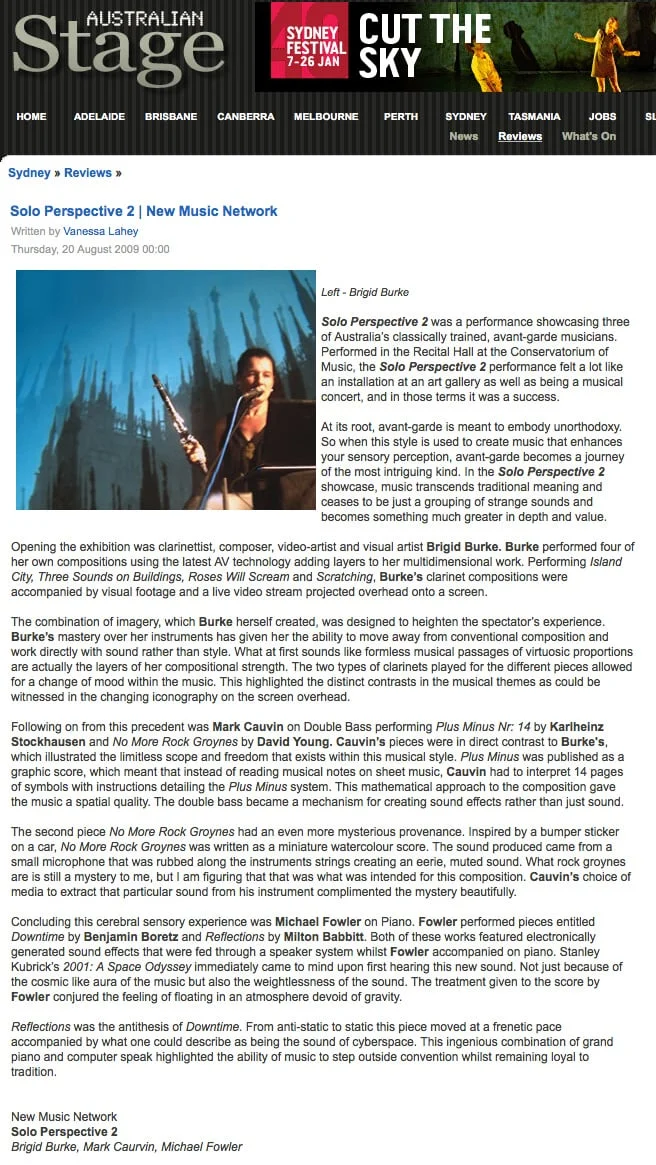
This image of a brilliant performer was reinforced by his collaboration with composer Cat Hope, where his performance effectively recreates the work each time.
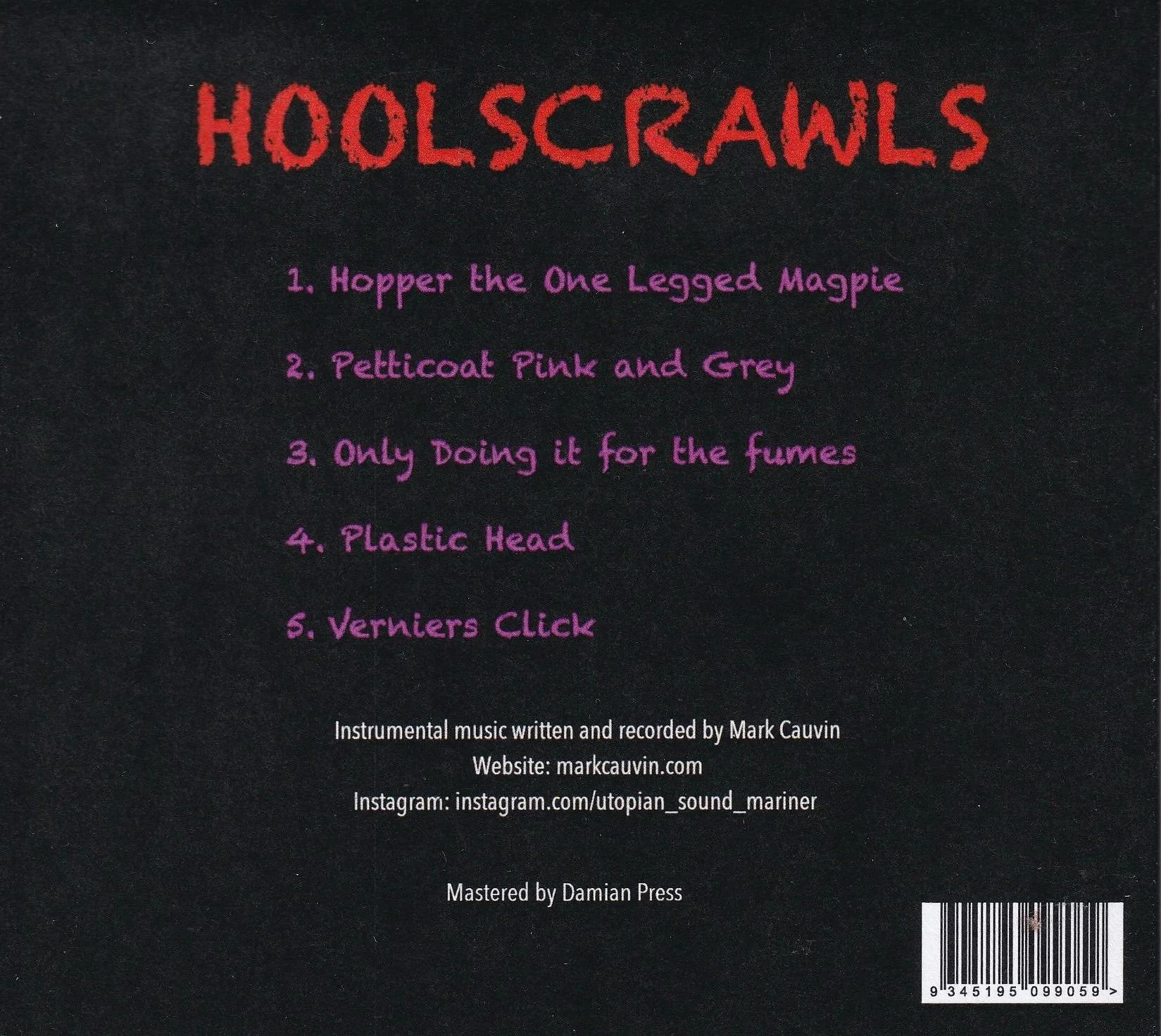
However, his later albums (Mariner at Sea and Hoolscrawls, 2025) radically changed my perception. We are no longer dealing with the music of an instrumentalist exploring an instrument’s possibilities—we are fully within composition. The focus is no longer on the instrument but on musical form, abstraction, and vision.
In short: we are in the presence of a major composer.
Mark Cauvin (in his own words)
“I came to music in high school. I played bass guitar with lots of effects in a band called Avatar. I always wanted to play the double bass but couldn’t afford one. After school I considered visual arts, but materials were too expensive, so music remained accessible.
An accident changed everything: a nurse crashed into my car and the compensation allowed me to buy my first double bass. It was pure chance, and I remain grateful.
At first I was largely self-taught. I spent long hours working, listening obsessively, trying to understand sound as something physical rather than expressive.
Like many teenagers, I was exposed early to rock and amplified music. Hearing the Sex Pistols for the first time was formative—their rejection of constraints resonated deeply with me. I was never drawn to style or genre, but to intensity, texture, and imagination.
Music became less about performance and more about thinking through listening and physical engagement.”
Later, after studying classical double bass at the Sydney Conservatorium, he realised orchestral life did not suit him. He turned toward solo work and contemporary repertoire, particularly Xenakis.
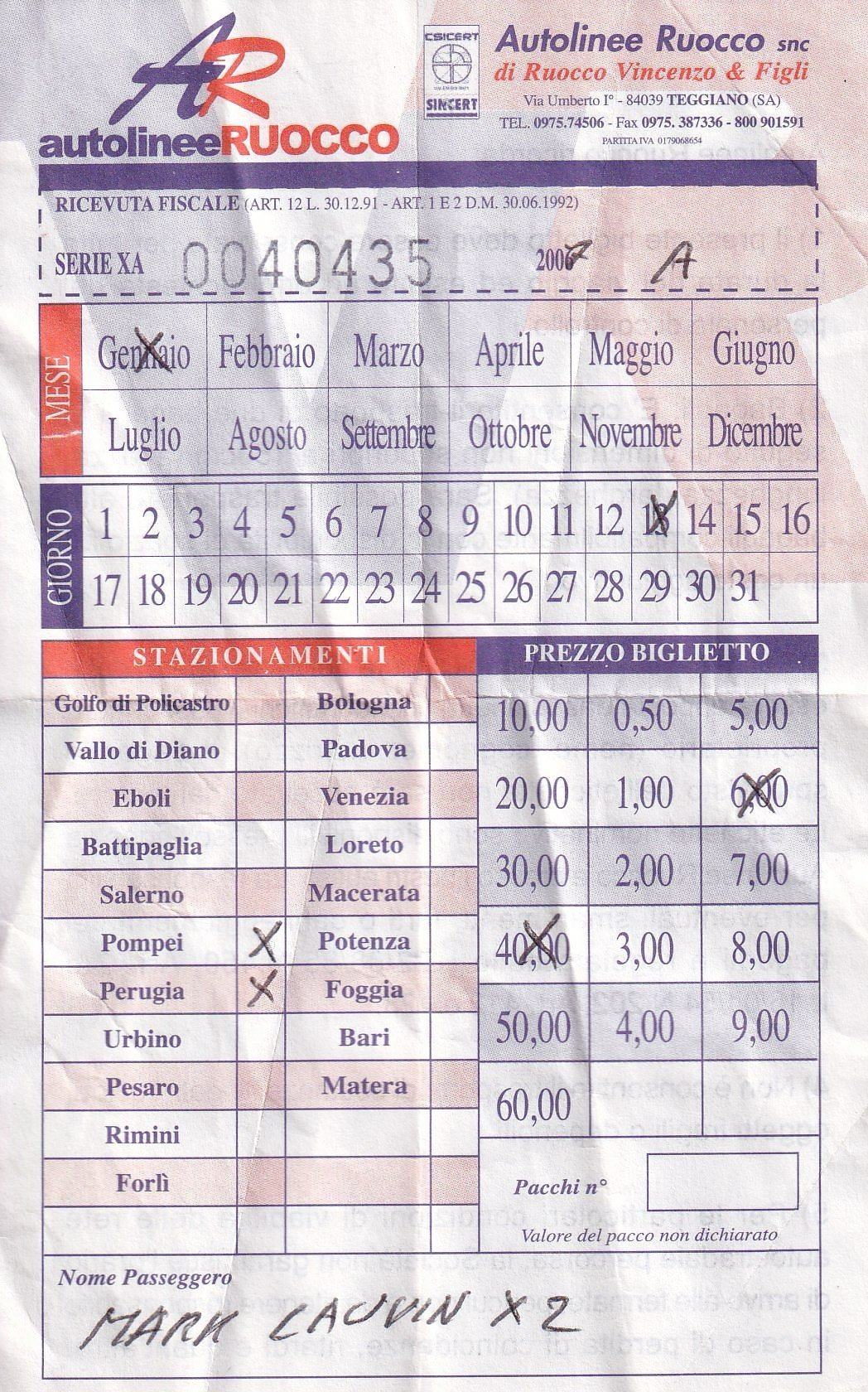
A crucial turning point came in 2006, when he travelled to Italy to study with Fernando Grillo:
“I lived with him for two months, working up to twelve hours a day. Lessons, meals, discussions—it was inseparable. His philosophy left a lasting mark on me. I had to relearn the instrument from the ground up.”
Grillo’s teaching extended beyond technique, addressing posture, projection, resistance, and a philosophical understanding of the instrument.
During this period, Cauvin’s interest in electronic music grew, particularly through Stockhausen. The score for Kontakte was a revelation—where visual notation and sound seemed perfectly aligned.
His work evolved toward extended techniques, mechanical systems, and hybrid approaches that blur the boundaries between performer, instrument, and machine. Today, his work is grounded in long-term exploration, where sound and process define the result rather than predetermined form.
Visual art also plays a key role in his thinking:
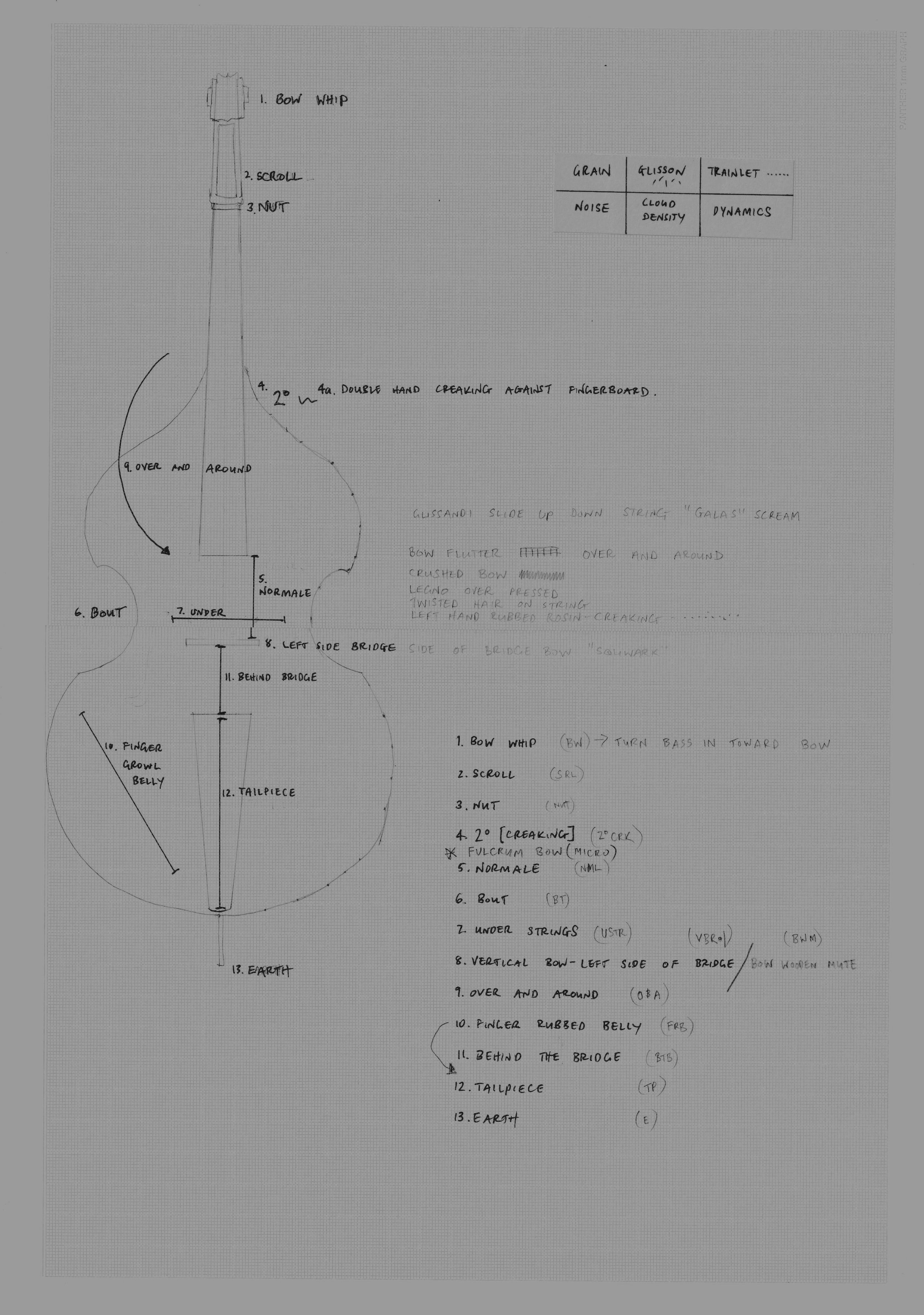
“I originally wanted to be a visual artist. That mindset never left me. It remains present in how I think about sound—especially with graphic notation, where gesture and spatial thinking feel more natural than traditional notation.”
Composition emerged gradually:
“As a teenager I notated bass pieces—that’s how I started composing. I never formally studied composition; I learned by working on other composers’ music.
My trajectory comes from the double bass: improvising, experimenting, building a palette of sounds. I also worked in dance workshops, developing a sense of anatomy with the instrument. Sound and physicality were my first compositional tools, before the studio became part of the process.”
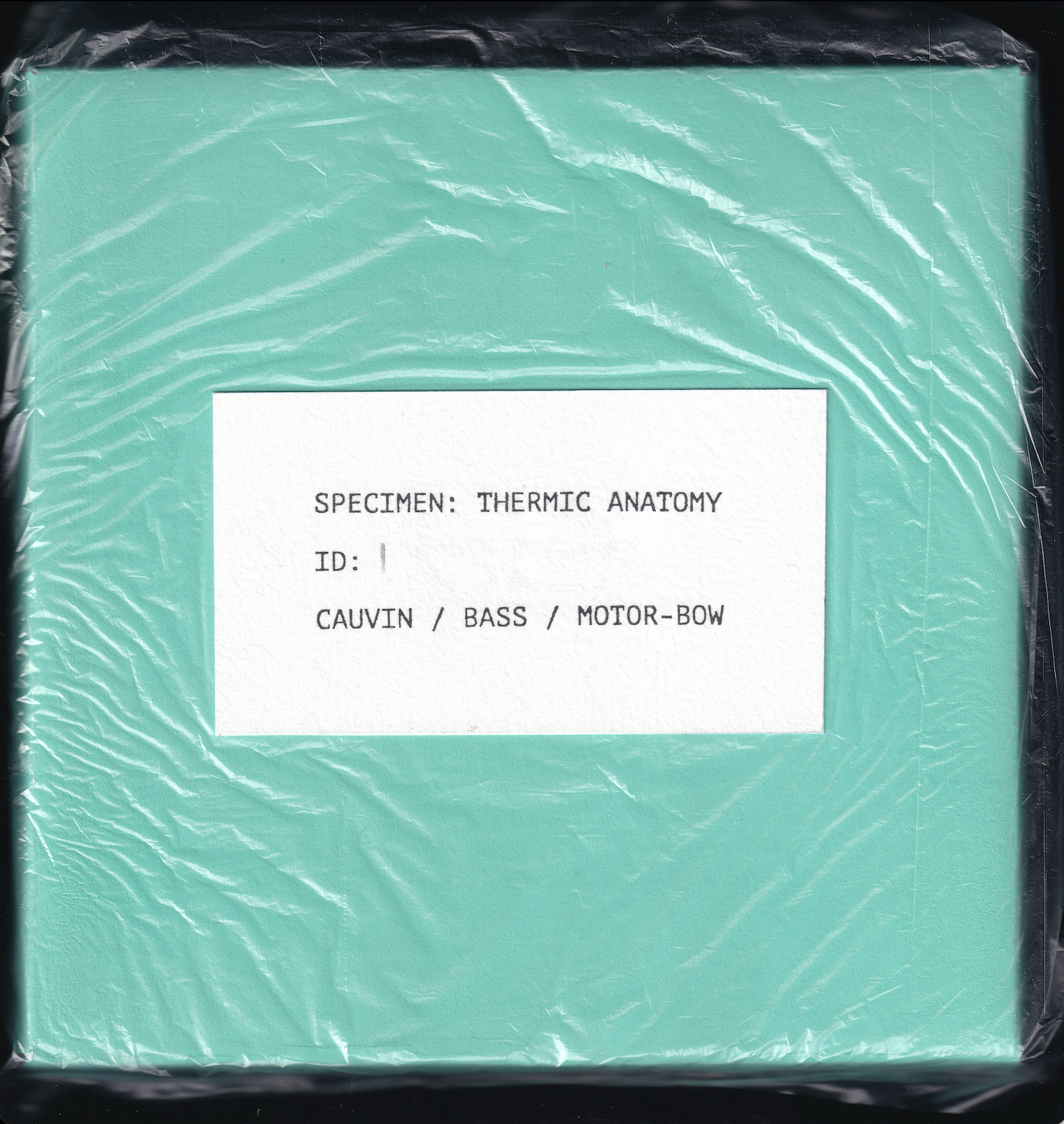
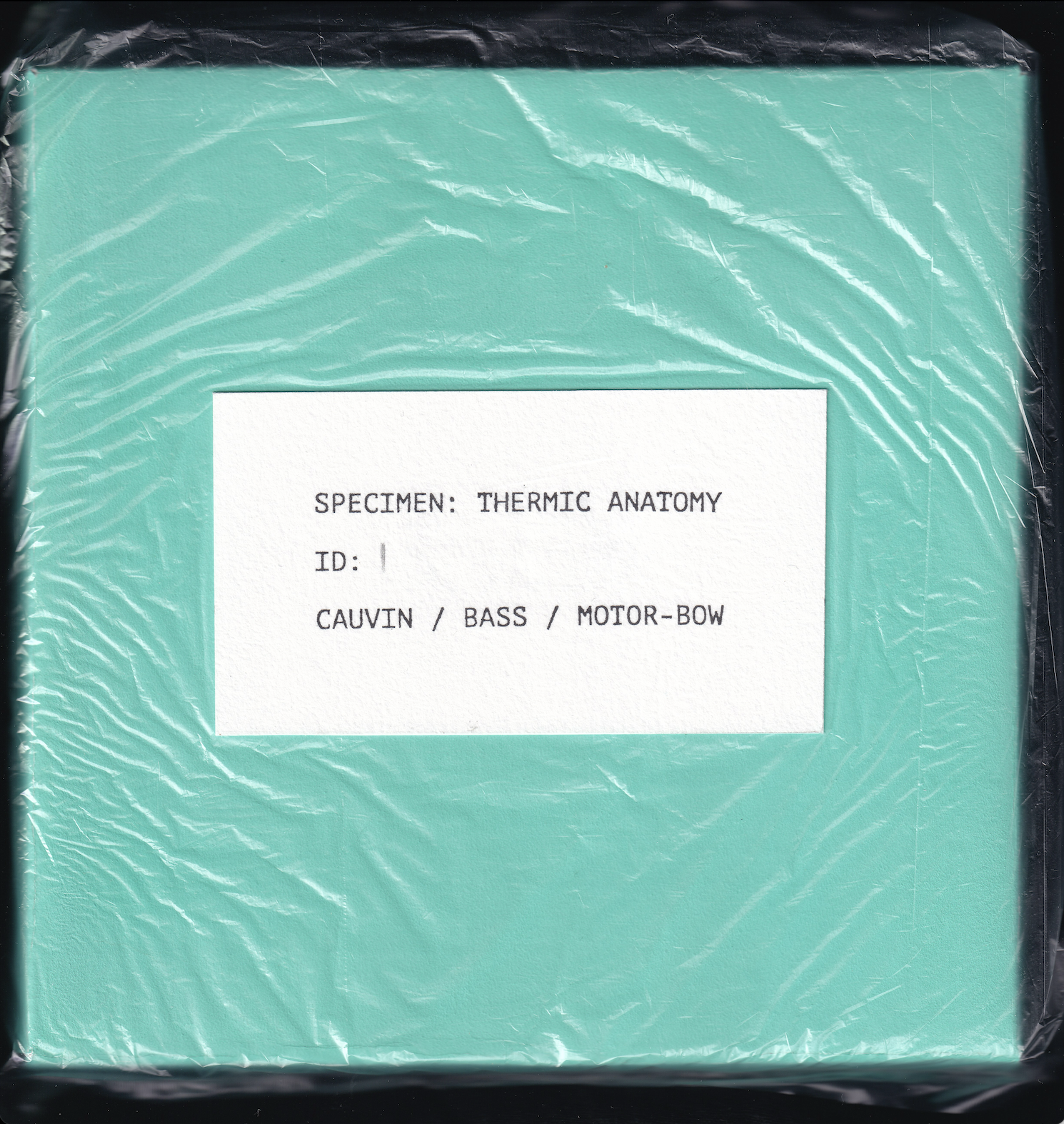
Specimen: Thermic Anatomy
A recent work, Specimen: Thermic Anatomy, represents a new stage. It exists as a limited handmade object (only seven copies), containing three mini CDs.
The piece itself is a three-part electroacoustic work (Vestibule, Baboon, Rupture), conceived as a single “specimen” observed through different states rather than separate movements.
It draws on:
extended double bass techniques
animal sounds from field recordings
analogue processing
The compositional logic is influenced by Xenakis’ Kottos, pushing physical and technical limits.
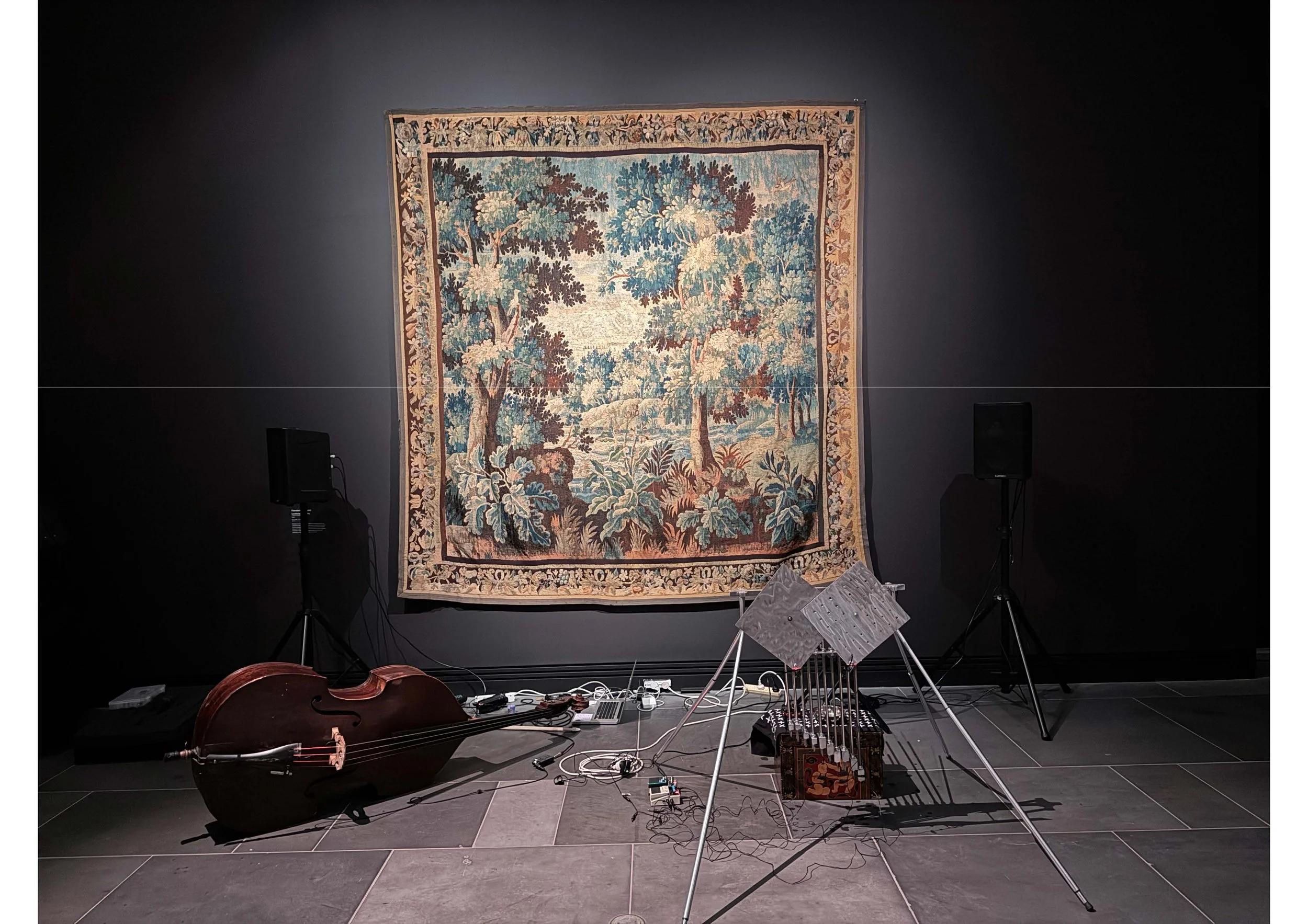
Cauvin also developed a motorised bow system:
“The motorised bow activates multiple strings simultaneously, generating dense textures through glissandi and speed control.”
He altered the tuning of the double bass (raising it by a fourth), increasing tension, brightness, and instability. He also introduced a “silent” electric bass (without pickups), used as part of the system.
Conclusion
Cauvin’s journey from instrumentalist to composer is gradual, deeply personal, and rooted in physical engagement with sound. It is shaped by mentorship, experimentation, and a refusal to separate thinking, playing, and composing.
It is not simply the story of a bassist becoming a composer—it is the emergence of a musical language where the instrument is no longer the centre, but one element within a broader, evolving ecology of sound.